
Elephant shelter in dire need of financial support
V. Sivaji | 13 April 2020 | 0 | Special features , Travel
It is not only that humans who are severely affected by the COVID-19 pandemic, the disease is taking its toll even on animals.
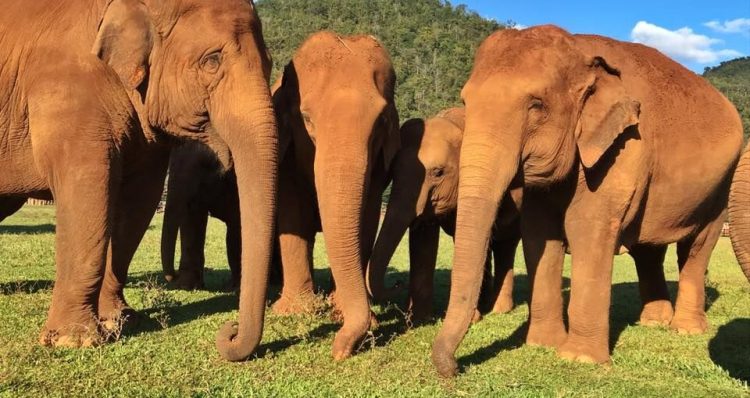
Take the example of the Elephant Nature Park (ENP) in Chiang Mai, Thailand which is undergoing tough times.
The shelter has some 3,000 elephants which also includes those which are disabled and emotionally unstable.
ENP was established in the 1990’s as a sanctuary and rescue centre for elephants.
It is a leader in ethical elephant tourism in Asia and relies on the income from tourism and volunteers to support operations.
Elephants at ENP spend their lives there free to roam as part of family groups.
The centre’s founder Saengduean Lek Chailert aka Lek has been caring for these elephants for the past 20 years but now is facing the daunting task of maintaining the cost of feeding and upkeep.
More and more elephants which were used for the tourism industry are being abandoned and although Lek would like to take all of them into her centre, the cost of caring for the majestic animals are soaring.
“Elephants are being left to die in Thailand, without food, proper care and chained up to prevent them from escaping, in the growing global crisis of COVID19,” said Lek.
She added that transporting elephants takes time, meticulous planning and with prohibitive costs, she simply cannot do this in time to save them, so the best option is to at least ensure they are fed, have access to water and are released from their chains where they are attacking each other and fighting over scarce food supplies.
The immediacy of the crisis has her team urgently scrambling to raise funds and if she is unsuccessful, the future in the next few weeks for these elephants is dire.
Lek believes that this unspeakable current hardship for the elephants will most likely also result in permanent damage to Thailand’s tourism reputation if no action is taken.
“If there is no support forthcoming to keep them safe, these elephants (some of whom are pregnant), will either starve to death or may be put onto the streets to beg.
“Alternatively, some may be sold to zoos and some may be returned to the logging business (which officially banned the use of elephants in 1989 due to its cruel nature).
“It’s a very bleak outlook unless some financial help is received immediately,” says Lek.
The Elephant Nature Park is organising a fund-raising effort for food and medical needs to support these animals too. Some of the elephants require intensive, regular veterinary care.
“There is no amount too big or small to positively impact the lives of these animals. Every dollar raised has always gone directly to Elephant Nature Park.
“However, now I will also share part of these donations to try and save elephants in other camps, where it is appropriate.” said Lek.

According to Lek, If they receive US$45,000 in donations, it will be matched as promised by Trunks Up, the US$90,000 could be used immediately to buy food, for urgent vet care for the wounds these elephants are now starting to inflict upon each other and transport for the most vulnerable to a safe sanctuary.”
“Time is of the essence. A huge improvement within, say 14 days could be achieved in 7-14 days to avert an appalling disaster. As such, I am calling on people to examine their conscience, philanthropists and companies who have philanthropic funds to step up now,” she adds.
Only the global community can now save these giant mammals and earth’s largest living animal, who are already at risk of extinction by 2040 according to WWF.
Members of the public will be surprised to know that US30 will feed an elephant for a day, $20 will feed a dog or cat for one week, $10 will feed a pig, cow or buffalo for one week, $ 8 will feed a monkey for one week and $ 5 will feed a rabbit for one week
Those keen to help these wonderful animals can donate through TRUNKS UP (https://jointrunksup.org) is a certified supporting organization which is currently MATCHING all donations, dollar for dollar, up to US$45,000.
Donations can be made via the site at this link: http://spot.fund/trunksup
Related Posts

Crockfords at Resorts World Genting honoured…
where2life | 25 February 2024 | 0Crockfords at Resorts World Genting (RWG) has once again been lauded as one of the world’s most outstanding hotels and properties by retaining its 5-star rating with the Forbes Travel Guide, making…

Canadian Minister of Agriculture visits Malaysia
where2life | 25 February 2024 | 0Canadian Minister of Agriculture and Agri-Food The Honourable Lawrence MacAulay concluded a two-day trade mission to Malaysia. The meeting highlighted and built on the strong business and people-to-people ties between Canada, Malaysia and the…

